
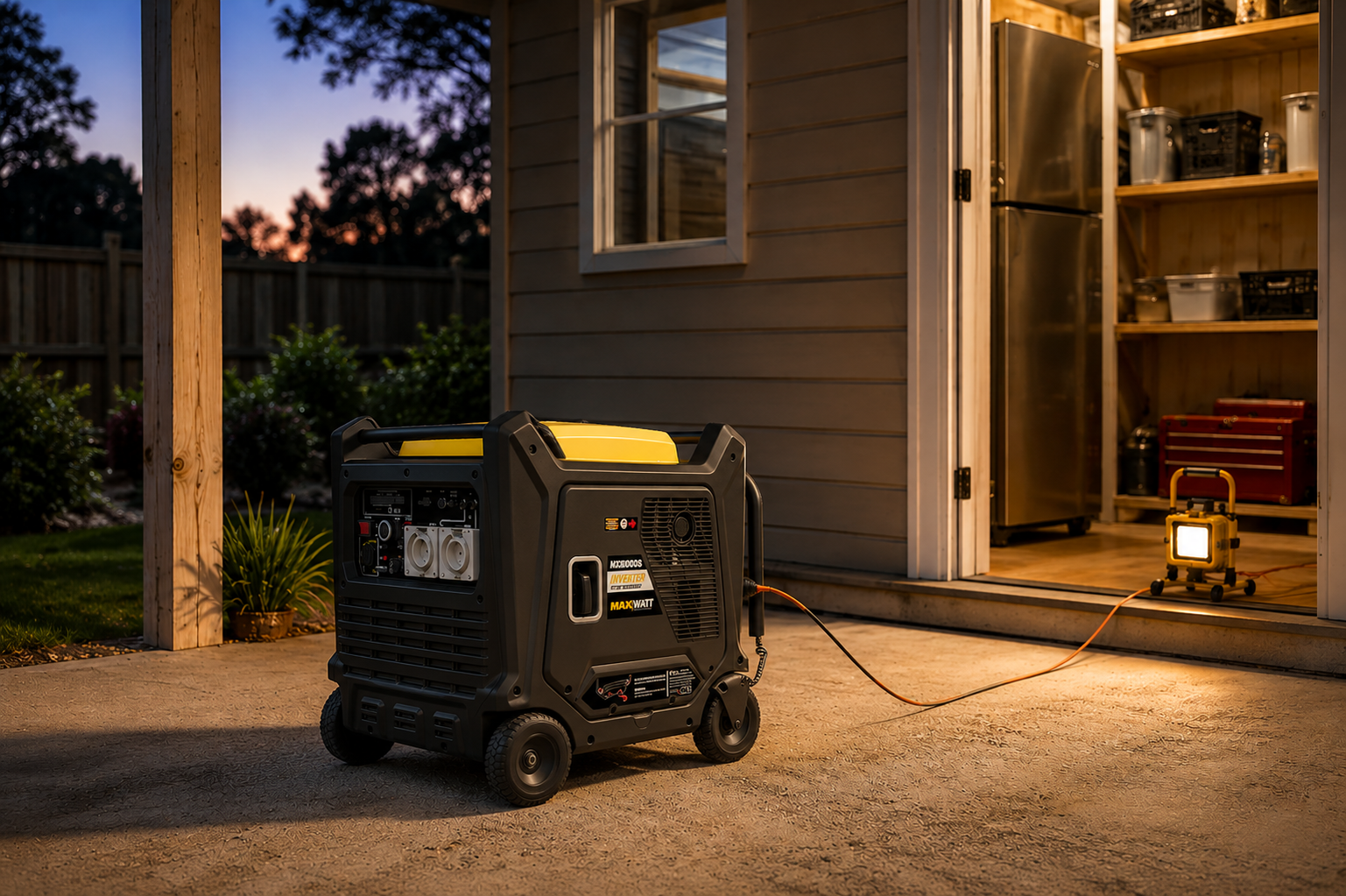
Choosing the right portable generator doesn’t need to be complicated. Whether you’re looking for backup power at home, running equipment at an outdoor event, heading off on a camping trip, or powering tools on a worksite, selecting the right generator starts with understanding your actual power needs. It’s a common misconception that the biggest generator is always the best option — in reality, oversizing can mean unnecessary upfront cost, higher fuel use, and less efficient operation.
Taking a few minutes to assess your requirements properly can save you money, improve efficiency, and ensure your generator performs reliably when you need it most. In this guide, MaxWatt — Brisbane’s trusted portable generator specialist for over 10 years — outlines the key factors to consider so you can choose with confidence
1. Determine Your Wattage Requirements
The most important step in choosing a portable generator is understanding how much power you actually need. Generators are rated by their wattage output, usually shown as starting watts and running watts.
Starting watts are the extra power required to start appliances with motors — such as refrigerators, air conditioners, or power tools — which draw a short surge when they switch on. Running watts are the steady, continuous power needed to keep those appliances operating.
If a generator can’t supply enough wattage, it will overload — potentially damaging both the generator and the equipment connected to it. On the other hand, choosing a generator that’s larger than necessary means higher purchase cost, increased fuel consumption, and more ongoing maintenance than you really need.
Practical tip: List everything you plan to run from the generator, for example:
-
Refrigerators and freezers
-
Air conditioners or fans
-
Lights and electronics
-
Power tools
-
Pumps or other heavy-duty equipment
Add up the running watts of these items to establish the minimum generator size you require, then allow a sensible buffer for startup surges and peak loads. If you’re unsure, the MaxWatt team can quickly match your equipment list to the right generator size — ensuring you get reliable power without overspending.
2. Check the Number and Type of Outlets
Once you’ve determined wattage, consider the number of outlets your portable generator provides.
-
If you plan to run multiple appliances simultaneously, make sure the generator has enough outlets to accommodate them.
-
Some models include a mix of standard 240V outlets, USB ports, and 12V DC connections for versatility.
-
Having the right number of outlets prevents the hassle of constantly unplugging and switching devices, keeping your power supply stable and safe.
MaxWatt’s portable generators offer a variety of outlet configurations, making it easier to power multiple devices at once, whether at home, on-site, or outdoors.
3. Consider Noise Levels
Noise output can be an important factor when selecting a portable generator, particularly depending on where and how you intend to use it.
On construction sites or for emergency backup situations, higher noise levels are often acceptable. However, in residential areas, campsites, or public events, a quieter generator is essential to avoid disturbing neighbours, guests, or surrounding wildlife.
MaxWatt’s inverter generators are engineered for low-noise operation, making them well suited to noise-sensitive environments. Features such as low-tone mufflers and ECO-throttle technology allow the engine speed to automatically adjust to the required load, reducing both sound levels and fuel consumption. These models are ideal where quiet, unobtrusive power is important — including camping, outdoor events, festivals, and residential use.
4. Electric Start vs. Recoil Start
Portable generators are available with different starting systems, and the choice can affect both convenience and overall cost.
Electric start generators use a push-button or key ignition, allowing the engine to start quickly with minimal effort — particularly useful for frequent use or where ease of operation is important.
Recoil start generators use a pull-cord mechanism. They are typically more affordable and mechanically simple, but require more physical effort and can be less convenient for some users.
When deciding, consider who will be operating the generator, how often it will be started, and the level of convenience you prefer. MaxWatt offers both electric and recoil start models, so you can select the option that best matches your application, usage frequency, and budget.
5. Portability and Transportation
Portability is a key advantage of portable generators, but size and weight can vary significantly between models.
Compact generators are lightweight and typically feature a single carry handle, making them easy for one person to load, transport, and position — ideal for camping, home use, or light-duty tasks.
Higher-capacity generators are naturally larger and heavier, often fitted with multiple handles and wheel kits to make movement manageable. These models are better suited to worksites, events, or applications where more power is required.
When choosing, consider who will be moving the generator and how often it needs to be transported or repositioned. If frequent lifting or vehicle loading is involved, a lighter or wheeled unit will make day-to-day use far more practical. MaxWatt offers a full range of portable generators — from compact, easy-carry models through to heavy-duty wheeled units — so you can match portability with the performance you need.
6. Fuel Tank Size and Runtime
Another important factor when selecting a portable generator is how long it needs to operate between refuelling. Fuel tank size and engine efficiency directly affect continuous runtime.
Many portable generators can operate for up to eight hours on a single tank under typical load conditions. For applications requiring longer operation, some models support extended-run fuel tanks or larger-capacity tanks to reduce refuelling frequency.
Fuel efficiency becomes especially important during prolonged use — such as outdoor events, worksites, or extended power outages — where downtime for refuelling can be inconvenient and disruptive.
MaxWatt can help you choose a generator with the right fuel capacity and efficiency to match your expected runtime, ensuring reliable operation without unnecessary refuelling interruptions.
7. Safety Features
Safety should always be a primary consideration when selecting a portable generator. Quality generators incorporate built-in protections designed to safeguard both the equipment and the user during operation.
Key features to look for include:
-
Low-oil shut-down to automatically stop the engine if oil levels drop too low
-
Overload protection to prevent damage to connected appliances and the generator
-
Circuit breakers or fused outlets for controlled, safe power delivery
-
Carbon monoxide (CO) safety measures and clear guidance for outdoor-only operation
Choosing a generator with these integrated safety systems reduces the risk of equipment damage, electrical faults, and personal injury, while ensuring reliable performance in real-world conditions.
8. Consider Additional Features
Many modern portable generators include features designed to improve ease of use, monitoring, and overall flexibility in different applications.
Useful additions to consider include:
-
Digital display panels showing voltage, runtime, and operating status
-
Parallel capability to connect two compatible generators for increased output when needed
-
USB charging ports for phones and small electronic devices
-
Fuel gauges and low-oil indicators for quick, clear status checks
These features make operation more intuitive and adaptable, particularly for frequent users, worksites, events, or anyone relying on their generator in varying conditions. Choosing the right combination of convenience features can significantly improve day-to-day usability and efficiency.
9. Why Choose MaxWatt for Portable Generators
MaxWatt is a trusted Brisbane supplier of portable generators, backed by over 10 years of experience in power equipment. We provide:
-
A comprehensive range of generators for domestic, commercial, and industrial applications
-
Expert guidance to match the right generator to your specific power requirements
-
Dependable after-sales service and technical support
-
Safe, efficient, and low-noise models suited to diverse environments
Whether you’re preparing for home backup, powering an outdoor event, or supporting a worksite, MaxWatt delivers high-quality portable generator solutions tailored to your needs — with the knowledge and support to ensure you choose with confidence.
Conclusion
Selecting the right portable generator comes down to understanding a few key factors — including wattage requirements, outlet configuration, noise levels, starting method, portability, fuel capacity, and built-in safety features. Taking the time to assess these upfront ensures you choose a generator that runs efficiently, protects your equipment, and delivers reliable power when you need it.
Whether you’re preparing for outages, powering a worksite, or supporting outdoor activities, the right generator will perform better and cost less to run over time. MaxWatt’s experienced team is here to help you match your application to the ideal model, so you get dependable power without unnecessary expense.
Contact MaxWatt today to explore our range of portable generators and find the power solution that fits your home, business, or lifestyle.
Tags: generator, Inverter Generators, Petrol Generators, Portable Generators, Quiet Generators