
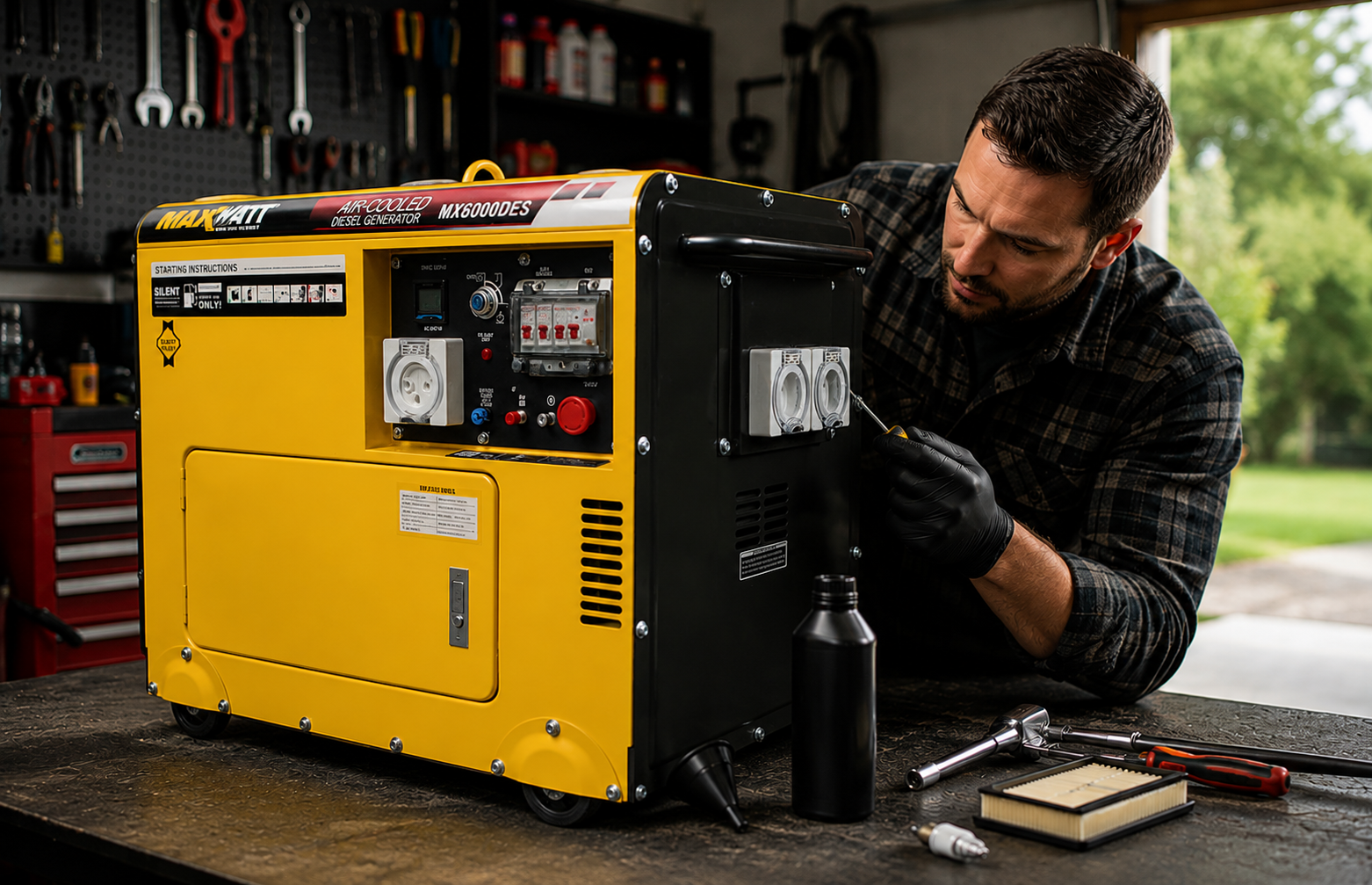
A generator that only gets attention during a blackout is the one most likely to let you down.
That matters more in Australia than it used to. Storm season, regional outages, off-grid setups, caravanning and rural properties all put more pressure on backup power. If your generator is sitting in the shed for months at a time, proper generator maintenance is what turns it from an expensive just-in-case purchase into something you can actually rely on when the lights go out.
At MaxWatt, the range covers everything from inverter generators for camping and home backup through to diesel generators, open design petrol generators, off-grid generators and power stations. Each type has its own ideal use case, but the basic rules of generator care stay remarkably consistent: keep fuel fresh, keep oil clean, store it properly, maintain the battery, check the air filter and run it on a schedule.
Here is a practical generator checklist you can use through the year.
Start with fuel, because stale fuel causes more trouble than most people expect
Fuel problems are one of the most common reasons portable generators become hard to start after sitting unused.
Petrol does not stay fresh forever. Over time it can degrade, lose volatility and leave deposits in the fuel system. Briggs & Stratton notes that fuel can start to go stale in as little as 30 days if it is left untreated, which is why storage habits matter so much for seasonal or emergency-use generators. If you only wheel your generator out during storm season or when a rural outage hits, old fuel can easily become the weak point.
For petrol models, the simplest approach is to:
- use fresh fuel
- avoid leaving fuel sitting in the tank for long periods
- follow your owner’s manual on whether to drain fuel before long-term storage
- use a fuel stabiliser if the generator will be stored with fuel in it
This is especially relevant for portable home-backup and caravanning units such as MaxWatt’s inverter range. A compact model like the MX2000iS or MX2500iS may spend long stretches unused between trips or outages, so fuel management matters just as much as engine quality.
Diesel generally stores better than petrol, but it still should not be ignored. Diesel units used on properties or worksites, such as the MaxWatt 6kVA 5000W diesel generator, still need clean fuel, water checks and routine inspection if they are expected to start reliably after sitting.
Oil is cheap. Engine repairs are not
If there is one part of generator servicing that owners delay too often, it is oil.
Oil breaks down with use, heat and time. Dirty oil loses its ability to lubricate and protect the engine properly, which can shorten the generator’s life fast. MaxWatt’s own generator guidance stresses that regular oil changes and filter replacements are important for performance and safety, and manufacturer manuals generally set oil-change intervals by hours of use rather than by calendar date alone.
That means two things.
First, if you use your generator heavily during blackout events, on a worksite or for off-grid living, you need to track operating hours rather than guessing. Second, even a generator that does not get much use still needs periodic oil checks because long storage can mask low oil levels, contamination or neglected maintenance.
As a general habit:
- check oil before each major use
- inspect for leaks around the engine and drain points
- change the oil at the intervals listed in your operation manual
- change it sooner if the generator has been running hard in dusty, hot or high-load conditions
If you are using a larger off-grid or backup model regularly, this part of generator maintenance Australia owners should treat as non-negotiable. Harsh temperatures and long run times are hard on engines.
Storage decides whether your generator ages well or badly
A generator can be mechanically sound and still deteriorate quickly if it is stored poorly.
Moisture, dust, temperature swings and old fuel all add up. Proper storage means keeping the unit clean, dry and protected without creating ventilation or safety issues. Owner manuals also commonly recommend preparing the engine for storage by addressing fuel and oil before the generator is put away.
For most households, that means storing the unit in a dry garage, shed or covered outbuilding, never exposed directly to weather. It should also be kept somewhere accessible. A backup generator buried behind old furniture and boxes tends to stay untested until the worst possible moment.
For people buying for outage readiness, storm preparation or rural use, this is where product choice matters. A quieter enclosed inverter generator may be easier to store and move for home use, while a heavier-duty diesel or open-frame petrol model may suit larger loads and worksite demands better. MaxWatt’s broad range makes that distinction useful, because storage needs tend to follow the type of generator you own.
If your goal is lighter emergency backup for electronics, lighting and short-term essentials, a MaxWatt portable power station may also be part of the solution. It avoids fuel storage altogether and can be paired with MaxWatt solar panels for off-grid charging.
Do not ignore the battery on electric-start models
A generator with electric start is only convenient if the battery still holds charge when you need it.
That is easy to forget because battery maintenance is invisible until the starter does nothing. MaxWatt product information for its diesel generators notes maintenance-free batteries on some models, but maintenance-free does not mean attention-free. Charge level, terminal condition and regular exercise still matter.
MaxWatt’s MX9000iS operator manual specifically advises running the generator for at least 20 minutes every month to help charge the battery and maintain the machine. That is a smart baseline habit for any electric-start model.
Your battery routine should include:
- starting and running the generator monthly
- checking for corrosion on terminals
- confirming the starter engages strongly
- replacing a weak battery before storm season or heavy-use periods
For rural properties and blackout-prone homes, this one step can save a lot of frustration. A dead starter battery is a terrible discovery in the middle of an outage.
Air filters deserve more attention in Australian conditions
Dust is part of life in many parts of Australia, and dust is bad news for small engines.
An air filter clogged with dirt restricts airflow, hurts performance and can increase engine wear. If your generator is used on a farm, a building site, in dry regional areas or around gravel roads, the filter may need inspection more often than the standard interval in the manual.
Generac’s maintenance guidance for generators includes routine air-filter inspection and replacement as a standard maintenance item, and the same principle applies across portable and backup units more broadly.
Make air-filter checks part of your normal generator care routine:
- inspect the filter regularly, especially after dusty use
- clean or replace it according to the manual
- never run the generator with a damaged or missing filter
- check the housing for dirt build-up when servicing
This is particularly relevant for open design petrol generators and worksite units that spend time in harsher environments.
A testing schedule is what keeps backup power real
The best generator in the world is still just a theory if you never test it.
Monthly exercise is one of the most useful habits in any generator checklist. Running the unit under light or moderate load helps circulate oil, confirms the starter and battery are working, and gives you a chance to catch fuel, noise or voltage issues before an emergency.
A practical schedule for general users looks like this:
- once a month: run the generator for around 20 minutes
- every run: listen for odd noises, check for leaks and confirm outlets are working
- every few months: inspect fuel, oil, battery and air filter
- before storm season or long trips: complete a full pre-use check
- after heavy use: inspect the unit and service it if it is due by hours
If your generator supports home backup, caravanning or off-grid living, this habit matters even more. The whole point is readiness.
Match maintenance to how you actually use the generator
A camping backup unit, a rural-property diesel machine and a home emergency power station do not live the same life.
That is why the smartest generator servicing approach is not generic. It should reflect the product type, fuel type and how often you rely on it. A portable inverter generator used for camping and occasional blackouts may need careful fuel rotation and monthly test runs. A diesel backup model may need closer attention to battery condition and scheduled servicing after long operating hours. A power station needs battery-cycle awareness and proper charging habits rather than oil changes.
MaxWatt’s range is broad enough that buyers can choose for the real job in front of them. Inverter generators suit quieter, portable use and sensitive electronics. Off-grid generators and diesel models fit heavier-duty backup demands. Power stations and compatible solar panels make sense where low-noise, fuel-free backup is the priority.
The point is simple: maintenance works best when it matches the machine.
A generator should not become a panic purchase that sits forgotten until the next outage warning. With a sensible routine around fuel, oil, storage, battery checks, air filters and monthly testing, it stays ready for the jobs Australians actually buy generators for, storms, blackouts, remote travel and life away from the grid.
FAQs
How often should I service a generator?
Most generators should be serviced according to the hours and intervals in the owner’s manual, not guesswork. Light-use household units may only need periodic servicing, while off-grid or worksite generators may need attention much sooner. As a rule, check oil, fuel, filters and battery regularly, and book proper generator servicing whenever the scheduled hour mark or annual maintenance window comes up.
Should I run it every month?
Yes, in most cases a monthly run is a smart habit. Running the generator for about 20 minutes helps keep internal parts lubricated, confirms it will start properly and can help maintain the battery on electric-start models. It also gives you time to spot stale fuel, leaks or other issues before a blackout, storm event or trip away.
How long does petrol last?
Petrol does not stay fresh indefinitely. Briggs & Stratton says untreated fuel can begin going stale in as little as 30 days, which is why fuel storage matters for emergency-use generators. If the unit will sit unused for a while, use fresh petrol, follow the manual on storage procedures and consider a fuel stabiliser if fuel is being left in the system.
When should I change the oil?
Change the oil at the interval set out in your generator’s operation manual, usually based on running hours and operating conditions. If the generator has worked hard during outages, in hot weather or dusty conditions, it may need an earlier change. Checking oil before major use is just as important, because low or dirty oil can quickly lead to engine wear.
Can generators sit unused?
They can, but they should not be ignored while sitting unused. Long periods of inactivity can lead to stale fuel, flat batteries, internal corrosion and surprise starting problems. A generator stored correctly and run on a schedule is far more reliable than one left untouched for months. Good generator care means treating storage as part of maintenance, not a substitute for it.